In today’s data-driven B2B landscape, mastering b2b campaign tracking isn’t just smart—it’s essential. Without accurate insights, even the most creative campaigns can fall flat. Let’s dive into how you can track, measure, and optimize every move.
Why B2B Campaign Tracking Is a Game-Changer

B2B marketing operates on longer sales cycles, complex decision-making units, and higher customer lifetime values. This makes precise b2b campaign tracking not just beneficial, but absolutely critical for long-term success. Unlike B2C, where purchases can be impulsive, B2B decisions are often strategic, involving multiple stakeholders and extensive evaluation periods. This complexity demands a robust tracking system that can attribute value across touchpoints and timelines.




Understanding the B2B Buyer’s Journey
The B2B buyer’s journey is typically divided into three stages: awareness, consideration, and decision. Each stage requires different content and engagement strategies, and b2b campaign tracking helps marketers understand which assets are driving movement through this funnel.
- Awareness: Prospects realize they have a problem.
- Consideration: They evaluate different solutions.
- Decision: They choose a vendor.
By tracking interactions at each stage—such as whitepaper downloads, webinar attendance, or demo requests—marketers can identify which campaigns are most effective in advancing prospects toward conversion.
The Cost of Poor Tracking
Without accurate b2b campaign tracking, companies risk misallocating budgets, undervaluing high-performing channels, and failing to replicate successful strategies. A study by Gartner found that over 60% of B2B marketing budgets are wasted due to poor measurement and attribution.
“If you can’t measure it, you can’t improve it.” – Peter Drucker
This quote rings especially true in B2B marketing. Misattribution can lead to cutting high-impact programs while doubling down on vanity metrics like page views or social likes that don’t correlate with revenue.
Key Metrics in B2B Campaign Tracking
To truly understand the effectiveness of your campaigns, you need to move beyond surface-level KPIs. While metrics like click-through rates (CTR) and impressions are easy to track, they don’t tell the full story. B2B success is measured by pipeline generation, deal velocity, and customer acquisition cost (CAC).
Lead Quality Over Quantity
In B2B, not all leads are created equal. A high-volume campaign that generates 1,000 unqualified leads is less valuable than one that produces 50 marketing-qualified leads (MQLs). B2b campaign tracking must include lead scoring mechanisms to differentiate between tire-kickers and serious prospects.
- Demographic fit (industry, company size, job title)
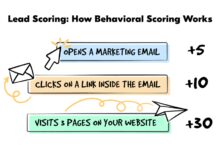
- Behavioral signals (content engagement, email opens, website visits)
- Firmographic alignment with ideal customer profile (ICP)
Tools like HubSpot and Marketo offer lead scoring features that integrate with CRM systems to ensure only high-potential leads are passed to sales.
Pipeline Velocity and Attribution
Pipeline velocity measures how quickly leads move through the sales funnel. It’s calculated using four variables: number of opportunities, average deal size, win rate, and sales cycle length. B2b campaign tracking should tie campaign efforts directly to these metrics.
For example, a targeted LinkedIn ad campaign might generate fewer leads than a broad Google Ads campaign, but if those leads convert at a higher rate and shorten the sales cycle, the LinkedIn campaign is more effective. Multi-touch attribution models help assign credit across multiple touchpoints, giving a clearer picture of which campaigns contribute most to revenue.
Essential Tools for B2B Campaign Tracking
The right technology stack can make or break your b2b campaign tracking efforts. From CRM platforms to marketing automation and analytics tools, integration is key. Siloed data leads to fragmented insights, making it difficult to draw actionable conclusions.
CRM Integration for Unified Data
Customer Relationship Management (CRM) systems like Salesforce and Zoho CRM are central to b2b campaign tracking. They store contact information, track interactions, and provide visibility into deal progression.
When integrated with marketing platforms, CRMs allow marketers to see which campaigns influenced specific deals. For instance, if a lead attended a webinar and later became a customer, the CRM can log that touchpoint, enabling accurate attribution.
Marketing Automation Platforms
Marketing automation tools like Pardot (by Salesforce) and ActiveCampaign enable personalized, scalable outreach while automatically tracking engagement.
- Email open and click rates
- Landing page conversions
- Lead nurturing path progression
These platforms also support dynamic content and segmentation, ensuring that the right message reaches the right audience at the right time—all while feeding data back into the tracking ecosystem.
UTM Parameters and URL Tracking
One of the most fundamental yet underutilized tools in b2b campaign tracking is the UTM (Urchin Tracking Module) parameter. By appending UTM tags to URLs, marketers can track the source, medium, campaign name, term, and content of traffic in Google Analytics.
For example:https://yourcompany.com/webinar?utm_source=linkedin&utm_medium=social&utm_campaign=Q3_webinar_series
This simple addition allows you to see exactly which LinkedIn post drove registrations, helping you optimize future social content. Tools like Google’s Campaign URL Builder make creating these links easy and error-free.
Setting Up a B2B Campaign Tracking Framework
Effective b2b campaign tracking doesn’t happen by accident. It requires a structured framework that aligns marketing, sales, and analytics teams around common goals and definitions.
Define Clear Campaign Objectives
Before launching any campaign, ask: What are we trying to achieve? Common B2B campaign goals include:
- Generating qualified leads
- Increasing brand awareness in a niche market
- Driving product demo requests
- Reducing customer churn through retention campaigns
Each objective requires different tracking mechanisms. For lead generation, focus on form submissions and lead scoring. For awareness, track reach, impressions, and engagement rates.
Align Sales and Marketing (Smarketing)
One of the biggest challenges in b2b campaign tracking is the disconnect between marketing and sales. Marketing may claim success based on MQLs, while sales argues those leads aren’t truly sales-ready.
To bridge this gap, establish a Service Level Agreement (SLA) between teams. Define what constitutes an MQL, how quickly sales will follow up, and how feedback will be shared. This alignment ensures that tracking data is not only collected but also trusted and acted upon.
Implement a Centralized Dashboard
With data coming from email, social media, web analytics, CRM, and ads, it’s easy to get overwhelmed. A centralized dashboard—using tools like Google Looker Studio or Tableau—aggregates key metrics into a single source of truth.
This dashboard should include:
- Lead volume by campaign
- Conversion rates by channel
- Pipeline generated per campaign
- Customer acquisition cost (CAC)
- Return on ad spend (ROAS)
Regular review of this dashboard enables agile decision-making and continuous optimization.
Advanced Attribution Models in B2B Campaign Tracking
Traditional last-click attribution gives all credit to the final touchpoint before conversion. In B2B, this is dangerously misleading. A prospect might engage with 10+ touchpoints over several months before making a purchase. Last-click models ignore the nurturing role of earlier campaigns.
First-Touch vs. Last-Touch Attribution
First-touch attribution credits the initial interaction (e.g., a Google search ad), while last-touch gives credit to the final action (e.g., a demo request form). Both are limited in scope.
In a B2B context, first-touch might highlight top-of-funnel awareness campaigns, while last-touch reflects bottom-of-funnel effectiveness. However, neither captures the full journey. Relying solely on either model can lead to skewed budget allocations.
Multi-Touch Attribution (MTA)
Multi-touch attribution distributes credit across multiple touchpoints. Common models include:
- Linear: Equal credit to all touchpoints.
- Time Decay: More credit to touchpoints closer to conversion.
- U-Shaped (or Position-Based): 40% credit to first and last touch, 20% to middle interactions.
- Algorithmic: Uses machine learning to assign credit based on historical data.
For b2b campaign tracking, U-shaped and algorithmic models are often most effective, as they recognize both the importance of initial engagement and the final push to close.
Challenges in Attribution Accuracy
Despite its benefits, multi-touch attribution isn’t foolproof. Common challenges include:
- Cookie limitations and privacy regulations (e.g., GDPR, CCPA)
- Cross-device tracking gaps
- Offline interactions (e.g., trade shows, phone calls)
To mitigate these, combine digital tracking with CRM data and use offline conversion imports. For example, if a lead from a trade show later converts, manually tag that interaction in your CRM to preserve attribution integrity.
Integrating Offline and Online Campaign Tracking
While digital tracking is powerful, many B2B campaigns involve offline elements—trade shows, direct mail, in-person meetings. Ignoring these creates blind spots in your b2b campaign tracking.
Tracking Trade Shows and Events
Events remain a cornerstone of B2B marketing. To track their impact:
- Use unique URLs and UTM parameters for event-specific landing pages.
- Issue QR codes that lead to tracked registration forms.
- Collect leads via badge scanners and upload them to your CRM with an event tag.
Post-event, monitor how many leads progress through the funnel. Did they attend a follow-up webinar? Request a demo? Close as a customer? This data reveals the true ROI of event participation.
Direct Mail and Personalized Outreach
Direct mail is experiencing a resurgence in B2B, especially for high-value accounts. To track effectiveness:
- Include personalized URLs (PURLs) on mailers.
- Use QR codes that redirect to tracked pages.
- Offer a unique promo code or landing page for responders.
For example, a direct mail campaign to CTOs could include a PURL like yourcompany.com/cto-invite-123, which tracks visits and conversions back to that individual and campaign.
Call Tracking and Conversation Analytics
Many B2B sales begin with a phone call. Call tracking software like DialogTech or CallRail assigns unique phone numbers to different campaigns, allowing you to track which ads or pages drive calls.
Advanced tools also offer conversation analytics, transcribing calls and identifying keywords (e.g., “pricing,” “demo,” “competitor”) to assess lead quality and sales readiness.
Optimizing Campaigns Based on Tracking Data
Tracking is only valuable if it leads to action. The real power of b2b campaign tracking lies in continuous optimization—using data to refine messaging, targeting, and channel mix.
A/B Testing for Continuous Improvement
A/B testing (or split testing) allows marketers to compare two versions of a campaign element—such as email subject lines, ad copy, or landing page designs—to see which performs better.
- Test one variable at a time for clear insights.
- Ensure statistical significance before declaring a winner.
- Apply learnings across similar campaigns.
For example, if an email with a personalized subject line has a 25% higher open rate, apply that strategy to future nurture sequences.
Segmentation and Personalization
B2B audiences are not monolithic. Tracking data reveals patterns in behavior and preferences, enabling segmentation by industry, company size, job title, or engagement level.
Personalized campaigns based on these segments consistently outperform generic ones. According to Campaign Monitor, segmented email campaigns generate 30% more opens and 50% more clicks.
Real-Time Adjustments and Agile Marketing
With real-time dashboards and automated alerts, marketers can respond quickly to underperforming campaigns. If a LinkedIn ad has a high cost per lead, pause it and reallocate budget to a better-performing channel.
Agile marketing principles—borrowed from software development—encourage short sprints, rapid testing, and iterative improvements. This approach is ideal for b2b campaign tracking, where market conditions and buyer behavior can shift quickly.
What is b2b campaign tracking?
B2B campaign tracking is the process of monitoring and analyzing the performance of marketing campaigns targeting other businesses. It involves using tools and metrics to measure engagement, lead generation, conversion rates, and revenue impact across multiple channels and touchpoints.
Why is attribution important in b2b campaign tracking?
Attribution is crucial because B2B sales cycles are long and involve multiple interactions. Accurate attribution helps identify which marketing efforts truly influence decisions, ensuring proper budget allocation and strategy refinement.
What tools are essential for effective b2b campaign tracking?
Essential tools include CRM systems (e.g., Salesforce), marketing automation platforms (e.g., HubSpot, Marketo), web analytics (e.g., Google Analytics), UTM builders, and call tracking software. Integration between these tools ensures comprehensive data visibility.
How do you track offline campaigns in a digital world?
Offline campaigns can be tracked using unique URLs, QR codes, personalized landing pages, and call tracking numbers. Data should be manually or automatically synced with CRM systems to maintain attribution accuracy.
What is the best attribution model for B2B?
There’s no one-size-fits-all model, but U-shaped (position-based) and algorithmic attribution are often most effective for B2B. They balance credit between first and last touchpoints while acknowledging the nurturing role of middle interactions.
Mastering b2b campaign tracking is no longer optional—it’s a strategic imperative. From defining clear objectives to leveraging advanced attribution models and integrating offline data, the path to marketing excellence is paved with data. By building a robust tracking framework, aligning sales and marketing, and continuously optimizing based on insights, B2B companies can unlock explosive growth and sustainable competitive advantage. The future belongs to those who measure, learn, and adapt.
Further Reading: